


Excavation Tarps: Job Site Protection in Quebec
A trench or excavation left open during a rainstorm isn’t just a cleanliness problem at the job site. It’s a structural risk: water seeping into the walls of an excavation, particularly in the clay soils common in Quebec, can be enough to weaken the wall and force a rework. A well-chosen excavation tarp limits this risk by keeping the excavation and excavated materials dry between two work phases.
At Toiles GR, we manufacture and distribute construction tarps designed for Quebec job sites. Durability and sizes adapted to the real dimensions of a trench or excavation site: our products meet the needs of excavation and earthwork contractors.
What you’ll find at Toiles GR:
- Polyethylene tarps to cover trenches and excavations
- Standard and custom sizes adapted to the size of your job sites
- Materials selected to withstand Quebec weather conditions
- A Quebec manufacturer who understands the realities of the field
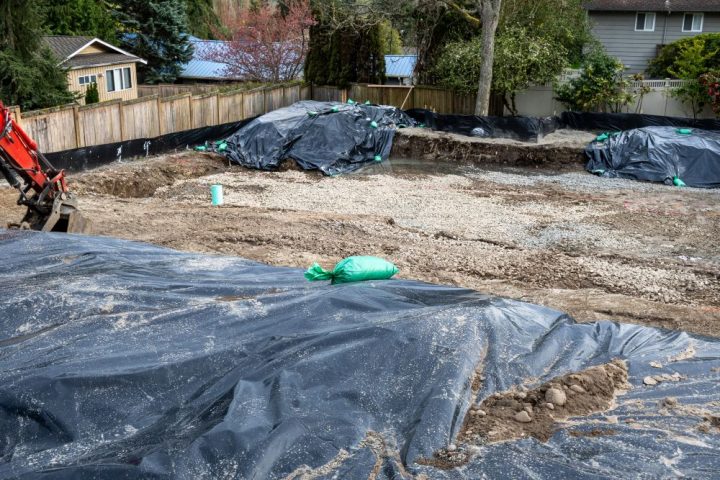
Common uses for tarps on an excavation job site
On an excavation job site, the tarp comes into play at a few key moments.
1. Covering an open trench or excavation against rain
In clay soils, common in Quebec, a water-saturated trench wall loses cohesion and becomes more prone to partial collapse. Deployed over the opening or along exposed walls, a tarp reduces water infiltration during a rainstorm or between work days.
2. Protecting backfill and stored excavated materials
Piles of soil, backfill, or other excavated materials stored at the edge of the site absorb rainwater, which makes them heavier and complicates their reuse. A tarp placed over these piles limits infiltration and makes it easier to resume backfilling work.
3. Protection between two work phases
An excavation job site often stops at the end of the day, over the weekend, or while awaiting an inspection before the next step. Covering the excavation during these periods of inactivity protects both the excavation and any equipment or materials left nearby.
Our job site tarps are designed for excavation work.
The choice of weight mainly depends on how long the excavation remains exposed. Here are the options available at Toiles GR.
Woven polyethylene tarps: the standard solution for covering a trench
Made from high-density polyethylene woven at 8 threads × 8 threads per square inch (850 denier), with a waterproof coating on one side. The edges are reinforced with a rope integrated into the hem. Metal grommets are spaced every 3 or 4 feet, with a rope attached to each anchor point.
Features:
- Resistance to moisture and rain
- Lightweight and quick to deploy over a trench or excavation
- Standard sizes available: 15′ × 20′, 20′ × 30′, 30′ × 50′
- 15′ × 755′ rolls for custom cutting to the length of the trench
This grade is suited to occasional coverage of a trench between two work phases or during a short rain event.
3.5-ounce white tarps: for excavations left open longer
Thicker than standard polyethylene, they offer better water resistance and fold easily for repeated use. They’re suited to situations where an excavation stays open for several days or when the job site goes through a freeze-thaw cycle.
6-ounce ultra heavy-duty tarps: for long-duration excavation job sites
Available in green or white, these tarps offer maximum resistance and are built to last a full season rather than a single job. A grade worth considering for large-scale or long-duration excavation job sites, rather than for occasional coverage of a residential trench.
Why a poorly protected excavation is a real risk
In Quebec, clay soils and freeze-thaw cycles are especially hard on the walls of a trench or excavation exposed to water. The CNESST regulates excavation, digging, and trench work: it requires continuous inspection of the walls and shoring according to the depth and nature of the soil.
Keeping an excavation dry doesn’t replace these measures, but it reduces a recognized risk factor: water infiltration that speeds up wall deterioration between inspections. A tarp deployed over the opening or along exposed walls complements the safety measures already in place on the job site.
What sets our excavation tarps apart
UV resistance and Quebec weather durability
An excavation job site can stretch over several weeks. Our tarps are treated to last, whether under the sun or in cold weather.
Sturdy grommets and reinforced edges
A tarp secured and removed repeatedly on the walls of an excavation or on piles of backfill is subject to constant tension. The metal grommets and reinforced edges of our products withstand this handling without giving way.
Large sizes and cut-to-length rolls
Our sizes go up to 30′ × 50′, with 15′ × 755′ rolls to fit the coverage to the exact length of a trench, without unnecessary surplus.
Volume availability for contractors
Our tarps are offered in bundles of 5 or 10, depending on the size, a useful option for contractors managing several excavation job sites at once.
Why choose Toiles GR for your excavation tarps?
Toiles GR is a manufacturer specialized in industrial tarps and covers for more than 30 years in Quebec and Canada. It’s not a generalist distributor selling tarps between two hardware store aisles. When you call, you speak with someone who knows the difference between a tarp for covering an occasional trench and a tarp for an excavation job site that stretches over several weeks.
- Manufacturing and distribution in Quebec: products designed for local climate realities
- North American-sourced materials: high-density polyethylene selected to withstand the elements
- Wide range in stock: standard sizes available for fast delivery
- Volume orders: pricing adapted to contractors working on a series of job sites
Protect your job sites with the right excavation tarp
The use of a tarp on a construction site is a technical decision, not a default purchase. On an excavation job site, a poorly protected trench can cost more than a well-chosen tarp from the start: rework, delays, and risks to wall stability.
At Toiles GR, we manufacture and distribute products selected for the real needs of excavation contractors in Quebec. Whether you’re looking for an economical tarp to cover an occasional trench or a sturdy tarp for a job site lasting several weeks, our team can guide you.
Contact our experts in custom tarp and cover manufacturing for a recommendation tailored to your job site.
Frequently asked questions about tarps for excavation work
1. Which tarp should I choose to cover a trench or excavation?
A standard woven polyethylene tarp is generally sufficient for occasional coverage, such as between two work phases or during a rain event. If the excavation stays open for several days or goes through a freeze-thaw cycle, a 3.5-ounce tarp offers better water resistance and greater durability.
2. How long can a tarp be left on an open excavation?
It depends on the grade chosen and the job site conditions. A standard polyethylene tarp is suited to short-term use, while the 3.5- and 6-ounce grades can handle extended exposure over several weeks. Regardless of the grade, the tarp’s anchoring and condition should be inspected regularly.
3. How do you secure a tarp on a trench or excavation?
The metal grommets, spaced every 3 or 4 feet with a rope attached to each one, allow the tarp to be anchored along the edges of the trench or on piles of backfill. For coverage that needs to withstand wind, it’s recommended to pull the tarp taut and add extra anchor points on exposed sides.
4. Are your tarps available in large sizes for large-scale excavation job sites?
Yes. Our tarps are available in standard sizes up to 30′ × 50′ and in 15′ × 755′ rolls for custom cutting to the exact length of a trench. For out-of-standard needs, we also manufacture custom tarps.
5. Can a tarp be reused from one excavation job site to another?
Yes, as long as it’s inspected after each use. The 3.5- and 6-ounce tarps are designed for several consecutive job sites if they’re cleaned, dried, and stored properly. The standard polyethylene grade is better suited to reuse over short periods.
6. Do you sell in volume for excavation contractors?
Yes. Our bundles of 5 or 10 reduce the unit cost and help maintain available stock for several simultaneous job sites. Contact us for large orders or recurring needs.