


Tarps for Exterior Cladding Projects
Need tarps for exterior cladding projects? Installing vinyl siding, aluminum siding, or fiber-cement panels is precision work that takes several days, sometimes several weeks. During this time, the facade is exposed, materials are stored on-site, and adjacent surfaces (foundations, windows, landscaping) are directly exposed to splashes, falling debris, and inclement weather. A well-chosen, securely fastened construction tarp is an essential part of a clean job. It protects what must remain undamaged and helps maintain the pace of the project regardless of weather conditions.
At Toiles GR, we manufacture and distribute sturdy construction tarps designed to meet the real-world needs of exterior cladding professionals in Quebec.
Why a Tarpaulin Is Part of an Exterior Cladding Project
An exterior cladding contractor does not work on an isolated surface. They work on the entire building envelope: walls, soffits, fascias, windows, footings, and ground-level features. Every adjacent surface is at risk of being damaged by falling panels, flying tools, or weather-related elements. Without protection, collateral damage adds up: a scratched window, a stained foundation, or replacement materials soaked by rain before they’re even installed.
Our Types of Tarps for Exterior Cladding Projects
Toiles GR offers several options depending on the project duration, the type of protection needed, and the environmental conditions. Here are the available products and their recommended uses on a facade project.
Economical Clear Woven Polyethylene Tarps
Made of high-density polyethylene, with an 8-rib × 8-rib weave per square inch at 850 denier. These tarps are coated on one side with 25 microns (1 mil) of polyethylene for an effective waterproof surface. The edges are reinforced with rope sewn into the hem, and grommets are spaced every 3 or 4 feet with a rope attached after each anchor point, allowing for quick and secure fastening to building facades or scaffolding structures.
Available in pre-packaged sizes (15′ × 20′, 20′ × 30′, 30′ × 50′) and in 15′ × 755′ rolls for projects requiring custom-fit coverage based on the facade’s configuration.
3.5-ounce White Tarps — Standard or FR
These white tarps are suitable for long-term construction sites where protection must last several weeks without replacement. The FR (flame-retardant) version meets the requirements of certain commercial construction sites subject to fire resistance standards. It is a suitable choice for exterior cladding projects on multifamily or institutional buildings.
Ultra-Durable 6-Ounce Tarps — Green and White
For facades exposed to wind, long-term construction sites, or situations where the tarp must withstand repeated friction against panels or structures. The 6-ounce weight offers superior mechanical strength and better resistance to Quebec’s weather conditions over an entire season. Available in green or white depending on the site’s visual requirements.
Scaffolding Debris Nets
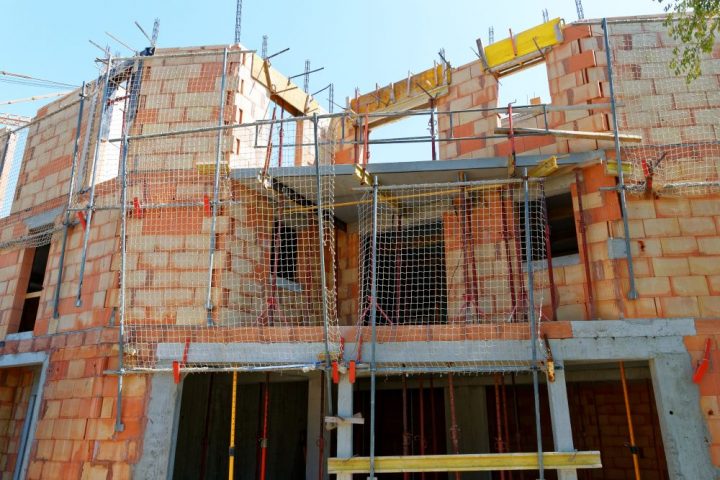
Manufactured in Quebec from braided polyethylene twine, Toiles GR debris nets are designed to be secured along scaffolding to prevent panels, flashings, and cutting debris from falling to the ground or onto public roads. Available in two colors depending on the visual requirements of the job site: green in 6.6’ or 10’ × 150’, and black in 8’ or 12’ × 300’ for taller facades or large areas.
Summary table of protective tarps and nets
| Tarpaulin Type | Features | Recommended Use |
| Economical woven polyethylene | 8×8 ribs/sq. in., 850 denier — 25-micron PE coating — reinforced edges — grommets every 3–4′ | General construction sites, short- to medium-term installations |
| Standard 3.5-oz white tarpaulin or FR | Enhanced UV resistance — fire-retardant (FR) version available | Long-term construction sites, commercial buildings with fire safety requirements |
| Ultra-heavy-duty 6 oz tarp — green and white | High weight per square foot — maximum resistance to abrasion and harsh conditions | Exposed construction sites, multi-story facades, long-season protection |
| Debris nets — green and black | Braided polyethylene rope — made in Quebec — green: 6.6’ or 10’ × 150’ / black: 8’ or 12’ × 300’ | Prevents falling materials on scaffolding, marks the perimeter of elevated job sites |
Common Uses of Tarps on an Exterior Cladding Project and Construction Site
1. Protecting Ground Surfaces During Installation
Concrete slabs, asphalt driveways, patios, flower beds—anything at the base of a wall under construction takes a beating. Falling vinyl, aluminum, or fiber-cement panels leave marks. Debris from pneumatic tools can reach surfaces up to several meters from the building. A tarp spread out on the ground, secured in place with its grommets and ropes, catches debris before it reaches the finished surfaces. It’s removed at the end of the day and rolled out again the next day, keeping the ground intact from the start to the end of the project.
2. Protecting Windows, Doors, and Other Openings
When installing exterior cladding, openings in the facade are high-risk areas. Existing windows can be scratched by panels handled improperly, soiled by cutting dust, or damaged by tool debris. A tarp secured to the rough frame or stretched across the opening creates an effective barrier without hindering the progress of the work. For projects lasting several days, it’s also a way to protect the interior of the building if an opening is temporarily left without window or door frames.
3. Cover materials stored on the job site
Slope panels, flashings, air barrier membranes, rigid insulation, etc.—anything waiting on the job site before installation is exposed to rain, dew, and freeze-thaw cycles. Moisture warps vinyl, corrodes untreated aluminum, and weakens insulation joints. A tightly stretched tarp over the stockpiles, positioned to allow water to run off without pooling, protects the materials without limiting the crew’s access to them.
4. Create a protected cutting area
Cutting fiber-cement panels generates a significant amount of fine dust. Without protection, this dust settles on nearby surfaces, contaminates landscaping, and seeps into openings. A tarp stretched as a barrier around the cutting area limits the spread of dust and makes cleanup easier at the end of the day. On urban construction sites or in residential areas, this is also a way to minimize disruption to neighbors and residents.
5. Catch falling materials and protect the ground below
On a high-rise exterior cladding job site, sloped panels, flashings, and fiber-cement scraps can fall from the scaffolding without warning. In dense residential areas or along streets, falling materials pose a real risk to pedestrians, vehicles, and landscaping at the base of the building. A debris net secured along the scaffolding catches these falling objects before they reach the ground. It is the net—not the crew’s vigilance—that ensures nothing gets through.
6. Protect Vegetation and Landscaping
Shrubs, flower beds, and patio surfaces along the building’s facade are difficult to move and costly to replace. Debris from cutting or installation can damage foliage, stain stone or concrete surfaces, and mar floor finishes. A tarp placed at the base of the wall, wide enough to cover the ground, prevents this damage without requiring extra time to move or replace the landscaping.
7. Cover the work at the end of the day in inclement weather
An exterior cladding project is often interrupted partway through a facade. A section of wall may remain unclad for several hours or an entire night while waiting for the next work session. In this case, a securely fastened tarp protects the exposed air barrier membrane and insulation from rain and wind. It prevents rework caused by avoidable damage and ensures that installation conditions remain in accordance with the manufacturers’ requirements.
Polyethylene or PVC: Why Choose Polyethylene?
This question comes up regularly in the field. PVC offers a longer lifespan and high mechanical strength, but it is significantly heavier, less flexible in cold weather, and considerably more expensive. For a residential or light commercial exterior cladding project, it is often overkill.
High-density woven polyethylene is lightweight, flexible even in cool weather, waterproof, and UV-resistant. It conforms to the irregularities of a facade, cuts easily to the project’s dimensions, and attaches quickly to any scaffolding structure. For cladding installers who move to a new job site every week, polyethylene’s combination of convenience, cost, and protection is hard to beat—provided you choose the right weight based on the duration and conditions of exposure.
Why Choose Toiles GR Tarps for Your Exterior Cladding Project
A product designed to withstand Quebec’s weather conditions
Cold winters, spring freeze-thaw cycles, winds blowing through facade openings… The high-density polyethylene used in Toiles GR tarps is selected to withstand these conditions. The material’s flexibility at low temperatures prevents the cracking and tearing seen in tarps less suited to our climate. A tarp that cracks or tears at -10 °C is a tarp that no longer provides any protection.
Rolls Cut to Size for Large Facades
Exterior cladding projects rarely involve standard-sized surfaces. A two-story facade with recessed corners, balcony overhangs, or dormers cannot be covered with a standard 20′ × 30′ tarp bought in bulk. The 15′ × 755′ rolls allow you to cut exactly the size needed for each section of the facade, without unnecessary waste and without seams that might let in water or wind. This format is designed for professionals working on non-standard configurations.
A selection of products tailored to every situation
Economical tarps for short-term projects, standard 3.5-ounce or flame-retardant (FR) tarps for extended use, ultra-durable 6-ounce tarps for harsh conditions or full-season protection… We have a solution for every need. Standard sizes cover most residential projects, and rolls allow for customization to non-standard configurations.
A Specialized Supplier, Not a Generalist
Toiles GR doesn’t just sell tarps tucked away between two hardware store aisles. We are a Quebec-based specialist in construction tarps and canvases, with over 30 years of experience manufacturing and distributing products for building professionals. When you have a question about weight per square meter, dimensions, or the best fastening method for a specific facade configuration, you’ll speak with someone who knows the subject and can recommend the right solution for your project.
Protect Your Exterior Cladding Project with the Right Tarpaulin
Using a tarpaulin on a construction site is a technical decision, not a default choice. An undersized tarpaulin costs more in the long run than a product chosen carefully from the start.
At Toiles GR, a Quebec-based manufacturer of custom tarps and canvases, our team can help you find the right solution for your facade construction site. Contact us for a recommendation.
Frequently Asked Questions About Tarps for Exterior Cladding Projects
1. Which tarp should I choose for a vinyl or aluminum siding installation project?
For a short- to medium-term residential project, an economical polyethylene tarp (8×8 weave, 850 denier) is sufficient for protecting the ground and adjacent surfaces. For a wind-exposed facade or a project lasting several weeks, a 3.5-ounce or 6-ounce tarp offers better long-term durability.
2. Can Toiles GR rolls be used to cover facades with unusual configurations?
Exactly. The 15′ × 755′ rolls are designed for just that: you cut the length you need based on the actual configuration of the facade, without paying for excess material and without compromising on coverage width. Ideal for facades with angles, projections, or irregular heights.
3. How do you secure a tarp to a high-rise facade without damaging it or creating a hazard?
Ropes attached to the grommets allow for securing the tarp without drilling or stapling directly into the facade. For work at height, the tarp is attached to the scaffolding uprights or to temporary mounting cleats. The reinforced edges and sturdy grommets withstand the tension of the fasteners without giving way, preventing the tarp from coming loose in high winds.
4. Can Toiles GR tarps be used in cold weather to protect a section of a facade between work shifts?
Yes. Woven polyethylene retains its flexibility and strength even at sub-zero temperatures, making it a suitable material for construction sites in Quebec year-round. A tarp securely fastened over an unfinished section of wall protects the exposed air barrier membrane and insulation from rain, snow, and wind between work sessions.
5. What type of tarp do you recommend to protect the vegetation at the base of a wall under construction?
An inexpensive polyethylene tarp laid flat on the ground, wide enough to cover the flower beds and landscaping at the base of the wall, is sufficient in most cases. For long-term protection or on job sites with significant debris (such as cutting fiber cement or sandblasting), a 6-ounce tarp offers better resistance to punctures.
6. Which debris net should you choose for residential exterior scaffolding?
For a one- to three-story residential facade, green nets that are 6.6’ or 10’ wide cover the height of most common construction sites. For taller facades or commercial projects, the black nets measuring 8’ or 12’ × 300’ offer greater length and better coverage over large areas. All our nets are manufactured in Quebec from braided polyethylene strands.
7. Do you offer bulk pricing for contractors working on multiple job sites simultaneously?
Yes. The tarps are available in bundles of 5 or 10 sheets depending on the size, which helps reduce the unit cost and allows contractors to maintain inventory across multiple job sites without having to place urgent orders. Contact us directly for bulk orders and specific custom-cut requirements.